

The Adventures of UltraGirl
The comics, films, TV shows, and characters that shaped the UltraGirl universe — as told by SH Binder.
UltraGirl didn't emerge from a vacuum. She's the product of a lifetime of watching TV in the 1970s and '80s — an era when Saturday mornings, weeknight prime time, and afternoon reruns were full of larger-than-life women in iconic outfits who occasionally found themselves in very dramatic situations. The costume, the peril scenarios, the power belt — all of it traces back to specific characters, specific scenes, and specific moments that lodged themselves permanently in the imagination of a kid watching television.
These are those inspirations.


The single biggest influence on UltraGirl. Lynda Carter's portrayal of Diana Prince / Wonder Woman defined what a superhero could look like on television — and the show's visual language, right down to the satin tights and the spinning transformation, became burned into popular culture. Three elements from the show became foundational to UltraGirl:
The show aired from 1975 to 1979. The contemporary seasons — Seasons 2 and 3 on CBS — with their modern spy-thriller storylines and tighter costumes, are the primary influence.

The UltraGirl costume — royal blue leotard, red shorts, gold belt — owes a significant debt to Supergirl, specifically the late-1970s comics incarnation where Kara Zor-El traded her classic skirt for a blue blouse and red hot pants. That look was the direct inspiration for pairing a shiny blue top with red high-cut shorts as the core of the UltraGirl silhouette.

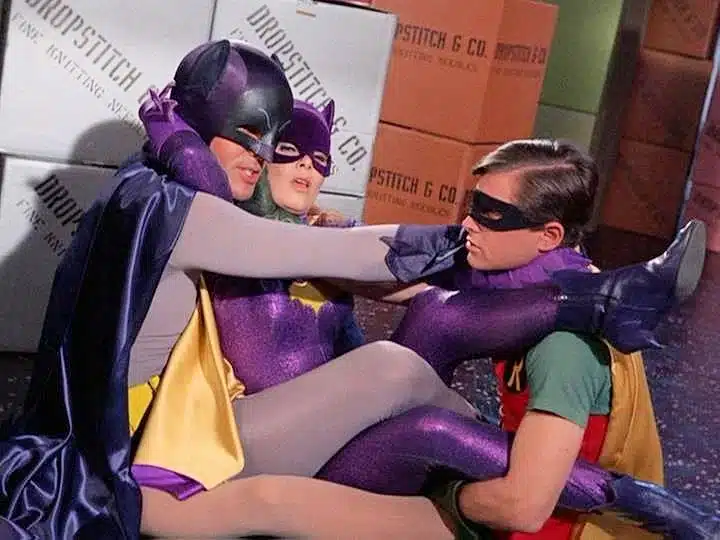

Yvonne Craig's Batgirl was the first female superhero to co-star in an American live-action TV show. Over 26 episodes she was put through an extraordinary catalog of peril scenarios, and the show's writers clearly understood how to make these sequences dramatically effective.
Two traps became directly referenced in UltraGirl video scripts:
These weren't just action sequences — they were inventive scenarios that lodged in the imagination. SH Binder has been riffing on that tradition ever since.

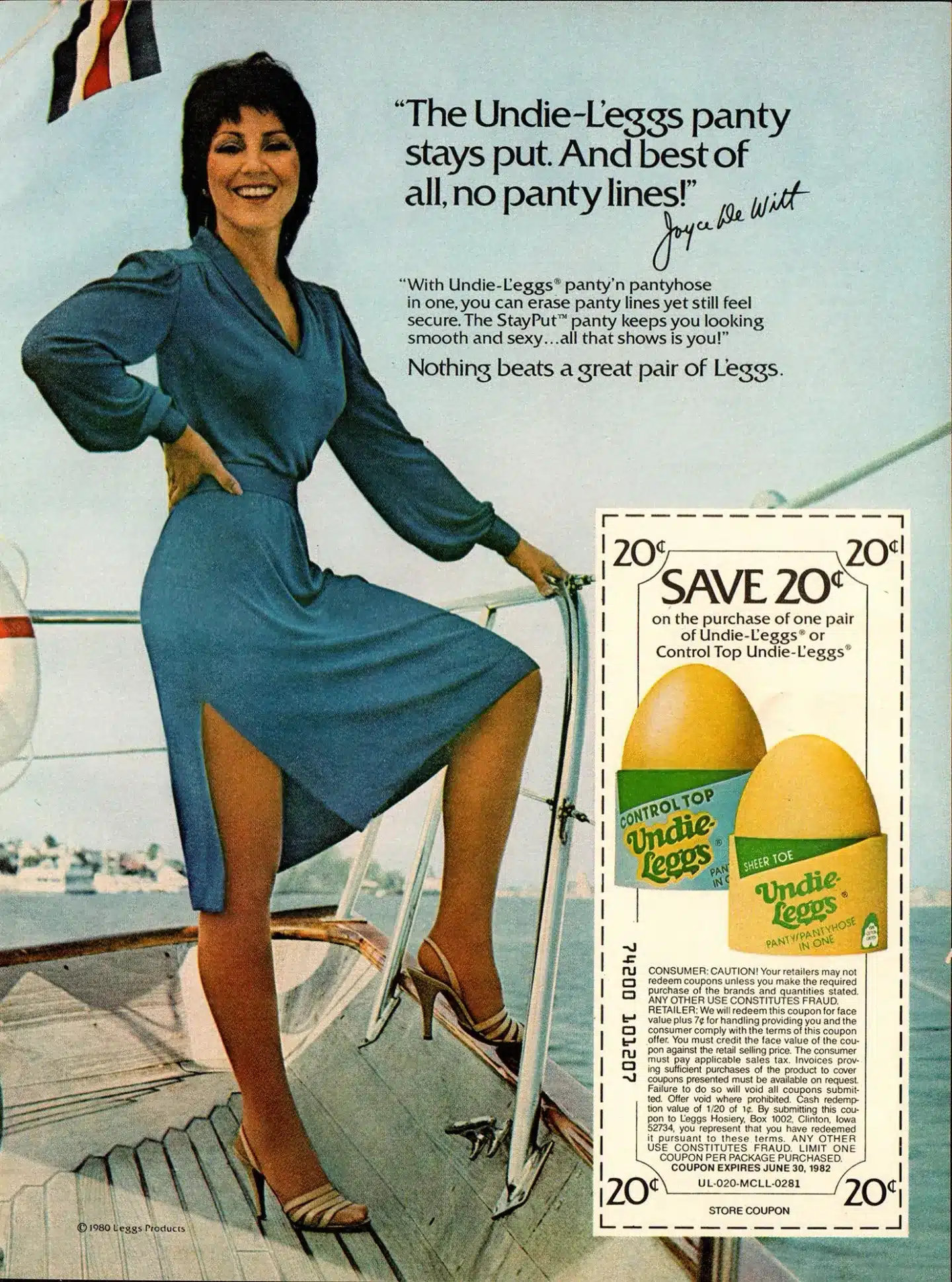
The late 1970s and early 1980s were a golden era of network TV that normalized pantyhose as everyday wear — visible, deliberate, and central to the visual appeal of female characters. Two shows exemplify this.
Daisy Duke (Catherine Bach) is the pantyhose story most people don't know: network censors ruled her iconic denim cut-offs too revealing on their own, so the only way the shorts could air was if Bach wore flesh-colored pantyhose underneath. The result accidentally highlighted her legs more than bare skin would have. Her legs were later insured for one million dollars. Daisy also had a habit of getting herself into trouble — the recurring theme of a capable, feisty woman who nonetheless finds herself in over her head had its influence.
Janet Wood (Joyce DeWitt, Three's Company) had a different story: DeWitt refused to work bare-legged and always wore pantyhose or tights on set, a personal rule that caused conflict with producers but ultimately led to her becoming a spokeswoman for L'eggs pantyhose. Chrissy Snow was deliberately styled in contrast — more carefree and playful — making Janet's consistent hosiery a defining part of her character's visual identity as the grounded, put-together roommate.
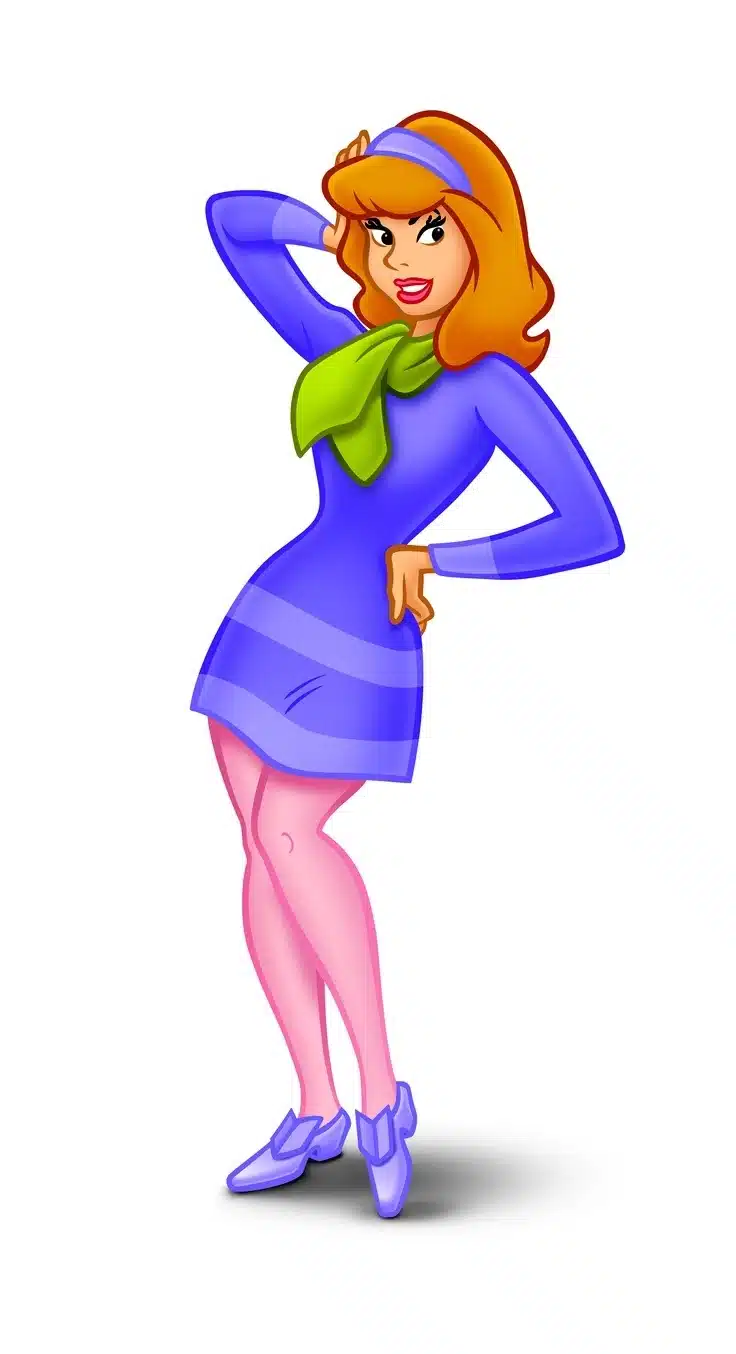

Daphne Blake holds a unique position in popular culture: she's arguably the most prolific damsel-in-distress in animation history. Her nickname was earned across decades of being kidnapped, tied up, bound and gagged, chained, netted, caged, locked in dungeons, and imperiled in almost every conceivable way.
What makes Daphne significant as an inspiration isn't just the frequency of her capture scenarios — it's their variety and creativity. The Scooby-Doo writers developed an enormous catalog of trap designs: tied to posts, suspended from ceilings, trapped in nets, strapped near explosives, hypnotized, and more. Every episode was essentially a new scenario.
Her standard appearance — purple mini-dress, pink pantyhose, purple heels, green scarf — made her visually distinctive. The pantyhose were canonical from day one.
For SH Binder, Daphne represents the template of the "capable woman who gets captured anyway" — a character whose adventures reliably lead to dramatic jeopardy. That template runs directly through UltraGirl's video catalog.


Erin Gray's Colonel Wilma Deering was described by British critic Clive James as "Wonder Woman with brains." She was the first female colonel on American television — a strong, assertive military officer — but also encased in form-fitting spandex jumpsuits that became a significant part of the show's appeal. Gray herself acknowledged this openly, noting she always had to wear a bathrobe over the costume between takes.
The show ran for 37 episodes across two seasons (1979–1981) and has remained a cult favorite.